
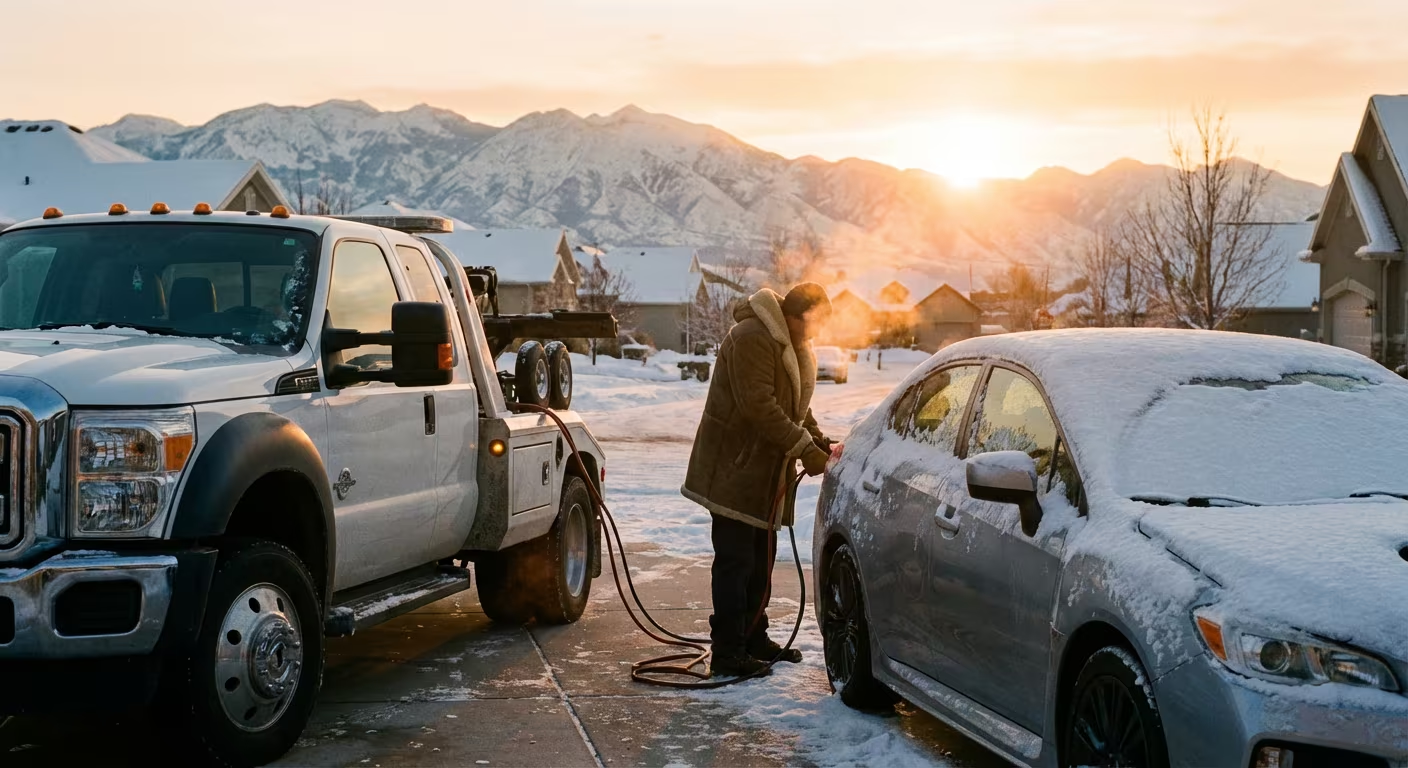
Here’s a number that should bother you: when the temperature drops to 0°F, your car battery loses roughly 60% of its cranking power. Meanwhile, your engine needs about twice the power to turn over in that same cold. That math doesn’t work out in your favor.
If your car battery dies in cold weather in Utah, you’re far from alone. AAA reports that dead batteries are the number one reason for roadside assistance calls during winter, accounting for nearly a third of all service requests nationwide. Here in the Salt Lake Valley, where overnight lows regularly dip into the single digits, we see the proof every morning.
We’re the jump-start crew that shows up at 6:45 AM in the Smith’s parking lot on 5400 South. We know exactly why this happens, and more importantly, how you can stop it from happening to you.
Your Car Battery Loses 60% of Its Power at 0°F — And Taylorsville Hits That Every January
The Science Behind Cold Weather Battery Death
Your car battery is basically a box of chemical reactions. Lead plates sit submerged in a sulfuric acid electrolyte solution, and when you turn the key, those chemicals react to produce electricity. Simple enough when it’s 75 degrees out.
Cold changes everything. The electrolyte gets sluggish, chemical reactions slow dramatically, and the battery produces less current. Meanwhile, cold engine oil thickens like molasses, forcing your starter motor to work much harder.
According to research from the Battery Council International (BCI), here’s what happens to your battery’s available cranking amps (CCA) as the thermometer falls:
| Temperature | Available Battery Power | Engine Cranking Effort |
|---|---|---|
| 80°F (summer) | 100% | Normal |
| 32°F (freezing) | 65% | 1.5x harder |
| 0°F (Utah January) | 40% | 2x harder |
| -20°F (inversion cold snap) | 25% | 2.5x harder |
Look at that 0°F row. You’ve got 40% of your battery’s power trying to do 200% of the work. That’s why you hear that slow, groaning crank on cold mornings — your battery is fighting a losing battle.
Why Utah Winters Are Especially Brutal on Batteries
Not all cold is created equal. Utah’s winter climate has a few specific characteristics that make it a battery killer compared to other cold-weather states.
The Temperature Swing Problem
Salt Lake Valley doesn’t just get cold. It swings wildly. You might get a 45°F afternoon followed by a 5°F overnight low. Those rapid temperature fluctuations stress battery components more than steady cold. The plates expand and contract, connections loosen slightly, and the electrolyte never fully stabilizes.
We see this all the time — someone drives home on a mild Tuesday afternoon, parks in their driveway in Taylorsville or Murray, and by Wednesday morning the car won’t start. The battery was marginal but managing. That 30-degree overnight drop finished it off.
Inversion Layers and Extended Cold
The Wasatch Mountains that make Utah beautiful also trap cold air in the valley for days or weeks at a time. During temperature inversions, the Salt Lake Valley floor can stay below freezing around the clock. Your battery never gets a chance to warm up and recover. Three or four consecutive days of this and even healthy batteries start struggling.
Altitude Matters Too
Taylorsville sits at roughly 4,300 feet elevation. Thinner air affects combustion, so your engine works a bit harder to start at altitude. Small factor on its own, but it stacks on top of everything else.
Warning Signs Your Battery Is About to Leave You Stranded
Dead batteries rarely die without warning. They send signals for weeks before they finally quit. Here’s what to watch for:
- Slow cranking — the engine turns over sluggishly, especially on the first start of the day
- Dimming headlights — lights that seem weaker at idle or when you first start the car
- Dashboard warning light — the battery or charging system indicator illuminates
- Electrical glitches — heated seats, radio, or power windows acting inconsistent
- Clicking sound — you turn the key and hear rapid clicking but no engine crank
- Swollen battery case — the housing looks bloated or warped from freeze-thaw cycles
Pro tip: If your battery is more than 3 years old and you notice even one of these signs heading into November, get it tested before the first hard freeze. A $0 battery test now beats a $150 emergency jump at 6 AM on I-15.
Consumer Reports confirms that most car batteries last 3 to 5 years, but in extreme climates like Utah’s — with both hot summers and freezing winters — that lifespan skews closer to the 3-year mark. Summer heat actually does the invisible damage by evaporating electrolyte fluid, and then winter delivers the knockout punch.
How to Protect Your Battery This Winter
You can’t control the weather rolling off the Wasatch Front, but you can control how prepared your battery is to handle it. Follow these steps before the cold really sets in:
- Get a battery load test. Any auto parts store will do this for free. It measures actual CCA output versus the battery’s rated CCA. If you’re below 75% of rated capacity, replace it now.
- Clean the terminals. Corrosion on battery terminals creates resistance. A wire brush and five minutes of effort can make a real difference in conductivity.
- Check the charging system. A weak alternator won’t fully recharge your battery during short trips. Have the alternator output tested alongside the battery.
- Use a battery tender. If your car sits for days without being driven — maybe a second vehicle or weekend car — plug in a trickle charger to maintain full charge.
- Park in a garage when possible. Even an unheated garage can be 10-15 degrees warmer than outside. That margin matters when you’re right on the edge.
- Minimize short trips. Quick drives don’t give your alternator enough time to fully recharge the battery. If you’re only driving a mile to the store, your battery loses a little charge each time.
What to Do When Your Battery Dies on a Cold Utah Morning
Prevention is great. But sometimes it’s already 14°F, you’re late for work, and your car is giving you nothing but a sad clicking sound. Here’s the play:
If You Have Jumper Cables and a Second Vehicle
- Pull the working vehicle close enough for cables to reach, but don’t let the cars touch
- Connect red to dead positive, red to good positive, black to good negative, black to unpainted metal on the dead car (not the battery terminal)
- Let the working car run for 3-5 minutes before trying to start the dead one
- Once started, drive for at least 20 minutes to recharge — don’t just idle
If You’re Stuck Without Help
Call for a professional jump-start. Seriously, that’s it. Don’t sit there cranking the key over and over — you’ll drain whatever charge remains and potentially damage the starter motor. One call and we’ll have someone out to you.
If you’re stuck on I-15 or I-215, pull onto the shoulder and turn on your hazards. Highway battery deaths are more dangerous because of traffic, so getting emergency help fast matters. We cover Taylorsville, West Valley City, Murray, and the surrounding valley.
When a Jump-Start Won’t Cut It
Sometimes the battery is truly done. A jump might get you running, but if the battery can’t hold a charge, you’ll be right back where you started the next cold morning.
Signs you need a replacement instead of a jump:
- This is the second or third time you’ve needed a jump this winter
- The battery is 4+ years old
- It takes longer than usual to start even after driving for 30+ minutes
- The battery case is physically cracked, leaking, or swollen
If a jump gets you going but you’re not confident the battery will make it through the week, drive straight to get it tested and replaced. Or if you’d rather not risk it, our towing service can get your vehicle to the shop so you’re not gambling on whether it’ll start again in a parking lot somewhere off Redwood Road.
Choosing the Right Replacement Battery for Utah
When you do replace your battery, don’t just grab the cheapest option. For Utah winters, pay attention to these specs:
- Cold Cranking Amps (CCA): Measures current delivered at 0°F for 30 seconds. For Utah, meet or exceed your manufacturer’s recommendation.
- Reserve Capacity (RC): How long the battery runs essential systems if the alternator fails. Higher is better for I-15 commutes.
- Battery group size: Make sure it physically fits. Check your owner’s manual or existing battery label.
AAA recommends matching or exceeding the original CCA rating. In our climate, going 50-100 CCA above minimum spec is cheap insurance.
Frequently Asked Questions
Why does my car battery die in cold weather in Utah specifically?
Utah combines extreme cold with dramatic temperature swings and high altitude — a triple threat for batteries. The Salt Lake Valley regularly sees overnight lows in the single digits, which can cut your battery’s available power by more than half while your engine demands significantly more cranking power.
How cold does it have to get for a car battery to die?
A fully charged, healthy battery can handle temperatures well below zero. But a battery that’s already weakened — three or more years old, partially discharged, or with corroded terminals — can fail at 20°F or even 32°F. It’s not just about the temperature; it’s about the battery’s condition going into the cold.
Can a completely dead battery be recharged or does it need replacing?
Sometimes a jump-start and a long drive will bring it back. But if it’s been fully drained multiple times or is over 3-4 years old, the internal plates are likely sulfated. Replacement is the smarter move than repeated jumps.
How long does a car battery last in Utah’s climate?
Expect 3 to 4 years on average. Utah’s hot summers accelerate internal wear by evaporating electrolyte, and the cold winters expose that weakness. Consumer Reports data shows batteries in extreme climates fail sooner than the national average of 4-5 years.
Should I warm up my car before driving in cold weather?
A 30-60 second warm-up is fine to let oil circulate, but idling for 10-15 minutes doesn’t help your battery — alternator output is lower at idle, delaying recharging. Drive gently for the first few minutes instead.
What should I do if my car won’t start and I’m stuck on I-15 or I-215?
Pull safely onto the shoulder, turn on your hazard lights, and call for roadside assistance immediately. Don’t try to flag down other drivers or stand outside your vehicle near traffic. A professional service truck with proper equipment can get to you quickly and safely.
When your battery gives up on a freezing Utah morning, Taylorsville Towing has you covered with fast jump-starts, roadside assistance, and towing across the Salt Lake Valley. Save our number: (801) 396-8259. We answer 24/7 — even at 5 AM when it’s 8 degrees out.