
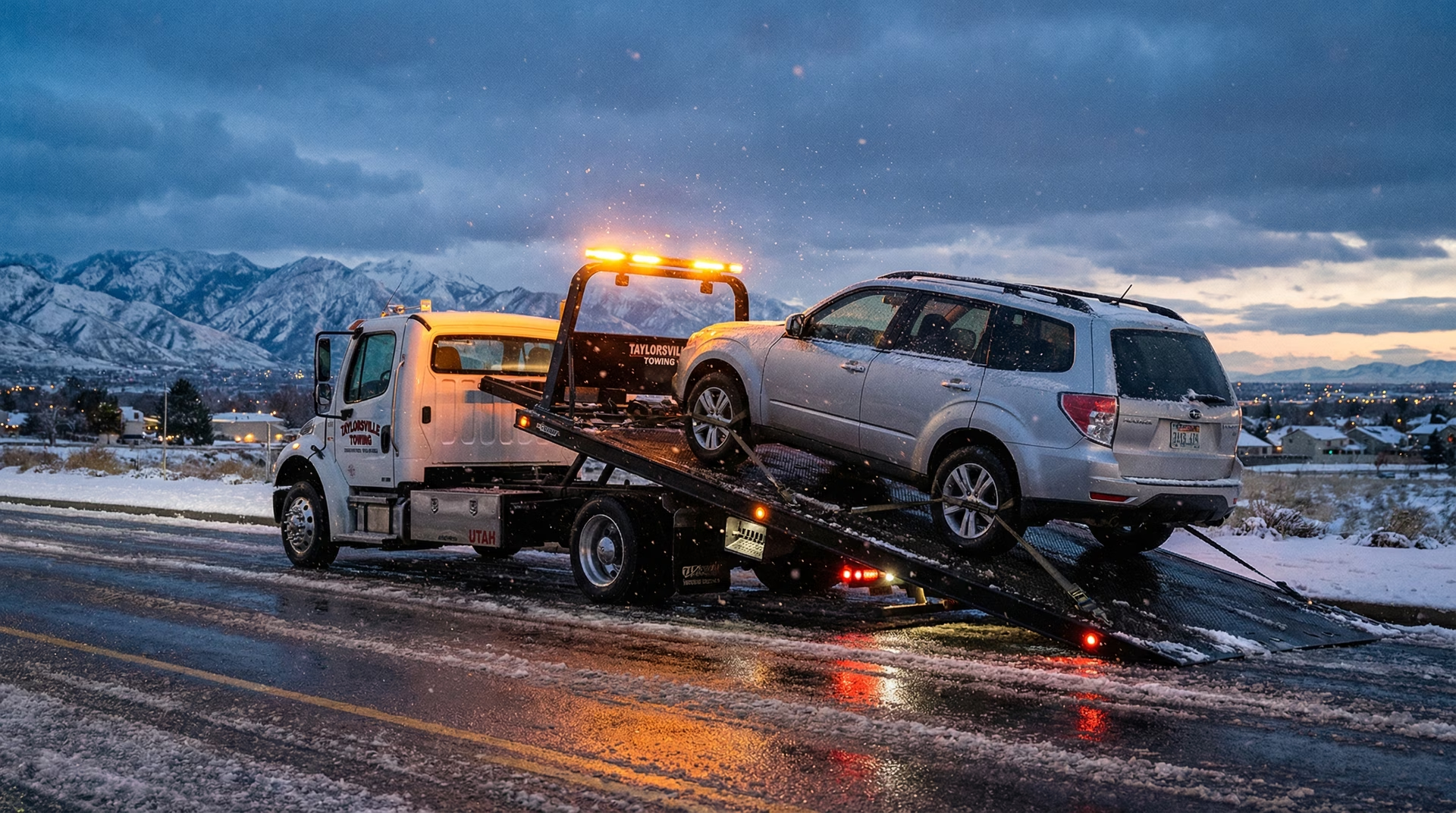
Winter in Taylorsville doesn’t play around, and neither should you when your car decides to quit in the middle of a snowstorm on I-215. Between the black ice and the heavy slush coming off the Wasatch Mountains, getting stranded is more than a nuisance—it’s a safety hazard that requires a solid plan.
Table of Contents
Why Flatbed Towing is the Utah Winter Gold Standard
When the temperature drops to 15°F and the roads are covered in a mix of salt and frozen grime, how you move your vehicle matters. Most people think any tow truck will do, but flatbed towing is the only way to go when conditions are treacherous. Unlike traditional wreckers that lift only two wheels, a flatbed carries the entire weight of your vehicle on a level platform. This is a big deal for a few reasons.
First, it protects your drivetrain. If you drive an All-Wheel Drive (AWD) or 4WD vehicle—which many of us do to survive the Kearns and West Jordan winters—towing with two wheels on the ground can destroy your transmission. On a flatbed, your tires aren’t spinning against the frozen pavement, which means zero wear and tear on your expensive differential.
Second, it’s about stability. I-15 is notorious for crosswinds and slick spots near the Murray exits. A car secured to a flatbed is far less likely to sway or fishtail than one being towed behind a truck on a yoke. This keeps the tow driver, your car, and every other driver on the road a lot safer.
Pro Tip: If you drive a luxury vehicle or an EV, never settle for anything less than a flatbed. The sensitive sensors and battery arrays in modern cars don’t handle the jarring “bounce” of a traditional tow well, especially in sub-zero temperatures.
Tip 1: Prep Your Vehicle for the Wasatch Front Freeze
Waiting until you’re stuck in a snowbank near Kearns towing territory is the wrong time to think about vehicle prep. The cold saps battery power faster than you’d believe. A battery that works fine at 70°F might only have half its cranking power when it hits 20°F. If your car won’t start, a flatbed is often necessary because you can’t always shift a dead car into neutral easily to use a standard tow hook.
Beyond the battery, check your tires. We aren’t just talking about tread depth here; we’re talking about rubber compound. All-season tires turn into hard plastic in the cold, losing their grip on I-215. Winter tires stay soft and “bite” into the ice. If you do end up needing a tow, having decent tires makes the loading process much safer for the operator, as the car is less likely to slide off the ramp during the winch-up.
Data from the ProPride Hitch blog suggests that weight distribution and tire pressure are the most overlooked factors when hauling or towing in the snow. If your tires are under-inflated, you’re asking for a bead failure when the tow truck pulls your car onto the bed.
Tip 2: Know the Difference Between a Winch-Out and a Tow
I’ve seen this happen a hundred times: a driver slides off the road into a ditch and calls for a tow. But if your car is buried in three feet of snow, a standard tow isn’t what you need first—you need a winch-out. This involves using a heavy-duty cable and hydraulic motor to pull your vehicle back onto solid ground before it can even be loaded onto a flatbed.
In Taylorsville, our “lake effect” snow can make visibility drop to near zero in minutes. If you find yourself off the shoulder, don’t try to floor it to get out. You’ll just bury the frame and make the recovery twice as hard. Turn off the engine if the exhaust is blocked by snow to avoid carbon monoxide poisoning, and wait for the professionals.
| Service Type | Best Used For | Estimated Cost |
|---|---|---|
| Standard Flatbed Tow | Mechanical failure, long distance | $75-$150 (base fee) |
| Winch-Out (Basic) | Stuck in mud or light snow | $50-$100 per hour |
| Emergency Accident Recovery | Major collisions, off-road flips | $200+ depending on gear |
| EV Specialty Towing | Electric vehicles, dead batteries | $100-$175 |
Tip 3: Vet Your Towing Service Before the Crisis Hits
The National Insurance Crime Bureau documented an 89% nationwide rise in predatory towing claims recently, a trend that Grokipedia notes is often tied to commercial motor vehicles. You don’t want to be a statistic. When you’re cold and frustrated, it’s easy to just say “yes” to the first truck that pulls up. Don’t do it.
Expert Advice: Always get at least three quotes before committing. Prices for towing services vary significantly in Taylorsville and the surrounding Midvale towing areas. A reputable company will give you a clear breakdown of the hook-up fee and the price per mile.
Also, check those reviews. A company might have a shiny truck, but if their drivers are known for being reckless or if they have a history of adding “hidden fees” for snow recovery, you’re better off waiting an extra twenty minutes for a pro. Any reputable outfit should be happy to provide references or point you to their online ratings.
Finally, ask about warranties. Quality towing work should come with a guarantee that your vehicle won’t be damaged during the loading or transport process. Make sure you understand what’s covered before you sign the digital tablet.
Tip 4: Stay Safe While You Wait for the Flatbed
The statistics are sobering. Each year, 24% of weather-related motor vehicle crashes occur on snowy, slushy, or icy pavement, per Federal Highway Administration data. Even worse, about 1,300 people are killed annually in these conditions. If you’re stuck on the side of I-15, you are in a high-risk zone.
Here is what you need to do while waiting for our truck to arrive:
- Stay in the car: Unless there is a risk of fire, your vehicle is your best protection against other sliding cars and the elements.
- Make yourself visible: Use your hazard lights. If you have road flares or reflective triangles, place them well behind your vehicle—but only if it’s safe to step out.
- Keep the tailpipe clear: As mentioned before, if you’re running the heater, make sure snow isn’t backing up into the exhaust.
- Call a friend: Let someone know your exact location. Don’t just say “I’m on I-215.” Give them the nearest exit, like 4700 S or Redwood Road.
Highway safety is a community effort. While timely salted highways can reduce crashes by up to 93%, the sheer volume of traffic in the Salt Lake Valley means there’s always a risk. A study by Roane Transportation emphasizes that visibility is the primary cause of secondary accidents—where people hit a car that is already stopped.
Tip 5: Understanding the Logistics of Winter Towing
Towing in the winter isn’t just about driving a big truck; it’s about physics and regulations. For instance, the Department of Transportation (DOT) has strict rules for commercial operators. According to Grokipedia, these include a maximum of 11 hours of driving after 10 consecutive hours off-duty to prevent driver fatigue. During a massive snowstorm in Taylorsville, tow drivers are working around the clock, but these safety “hours-of-service” rules still apply to keep everyone safe.
If you’re calling for Millcreek towing or help in Sandy towing, realize that the “estimated time of arrival” (ETA) might be longer during a storm. It’s not because we’re slow; it’s because the truck has to navigate the same icy mess you’re stuck in.
The Electric Vehicle (EV) Complication
If you’re driving a 2025 Ford F-150 Lightning, you’ve got a powerhouse of a truck, but it has specific towing needs. Per Grokipedia, the Lightning is rated for a maximum of 10,000 pounds, but its range can drop significantly when towing in the cold. If you run out of juice, you cannot “flat tow” an EV. The motors are always connected to the wheels, and towing them with the wheels on the ground can generate electricity that fries the system. A flatbed is the only safe way to move a dead EV to a charging station in Taylorsville.
The Cost of “Cheap” Towing
We’ve all seen the “cheap tow” ads on social media. In the world of flatbed towing, you usually get what you pay for. A “budget” operator might not have the right insurance or the proper straps to secure your vehicle. In the middle of a Utah winter, the last thing you want is your car sliding off a tow truck because the driver used rusted chains instead of high-grade nylon straps.
Takeaway: Investing in a professional service might cost $20-$30 more upfront, but it saves you thousands in potential transmission repairs or bodywork down the road.
Local Knowledge Matters
Taylorsville has its own rhythm. We know that the intersection of 5400 S and Redwood Road becomes a skating rink the second the sun goes down. We know that the hills near Cottonwood Heights towing zones require extra caution. When you call a local company, you’re getting a driver who knows which backroads are plowed and which ones will trap a tow truck just as easily as a sedan.
Winter driving tips from Air Lift Company suggest that being prepared with an emergency kit is non-negotiable. Your kit should include:
- A heavy wool blanket or sleeping bag.
- Extra gloves and a warm hat.
- A small shovel and a bag of sand or kitty litter for traction.
- Jumper cables or a portable jump pack.
- Non-perishable snacks and water.
If you’re stuck near Murray or West Valley, having these items can make the 45-minute wait for a flatbed feel like a minor inconvenience rather than a life-threatening emergency.
Final Thoughts on Winter Recovery
The reality of living along the Wasatch Front is that snow happens. It’s beautiful on the mountains but brutal on the pavement. By choosing flatbed towing, vetting your provider, and staying prepared, you turn a stressful breakdown into a manageable situation.
Don’t let a “discount” tow turn into a nightmare. Whether you’re heading home from work in Salt Lake City or taking the kids to practice in Kearns, keep our number handy. We’ve spent years navigating these roads, and we know exactly what it takes to get you and your car home safely when the Utah sky opens up.
Ready to Get Started? Contact Taylorsville Towing Today
When you need professional towing services in Taylorsville and surrounding communities, Taylorsville Towing is here to help. Our experienced team provides quality workmanship with transparent pricing and a commitment to your complete satisfaction.
Get a free quote today Call us at 801-980-3535.
Frequently Asked Questions
Why is flatbed towing recommended for winter conditions in Taylorsville?
Flatbed towing is the gold standard because it carries the entire vehicle on a level platform, protecting the drivetrain of AWD/4WD vehicles and providing better stability on icy roads like I-15.
What is the difference between a winch-out and a standard tow?
A winch-out uses a heavy-duty cable to pull a vehicle out of a ditch or deep snow back onto solid ground, whereas a standard tow is used to transport the vehicle once it is already on the road.
How should I stay safe while waiting for a tow truck in a snowstorm?
You should stay inside your vehicle for protection against other sliding cars and turn off the engine if your exhaust is blocked by snow to prevent carbon monoxide poisoning.
Can traditional towing damage my All-Wheel Drive (AWD) or Electric Vehicle (EV)?
Yes, towing with two wheels on the ground can destroy the transmission of AWD vehicles and damage sensitive sensors or battery arrays in EVs, making flatbed towing the safer choice.
How much does winter towing and recovery typically cost?
A standard flatbed tow usually has a base fee between $75 and $150, while winch-out services for vehicles stuck in snow typically cost between $50 and $100 per hour.